Designed and developed an innovative feature for collaborative music listening as part of my app development coursework. Harmony Mode allows users to seamlessly share and synchronize playlists with friends in real-time.
- Role: Product Manager with Design Skills & Developer
- Skills: User Research, Prototyping, iOS Development, UI/UX Design
- Impact: Enhanced social connection through music, improving user engagement by creating shared listening experiences
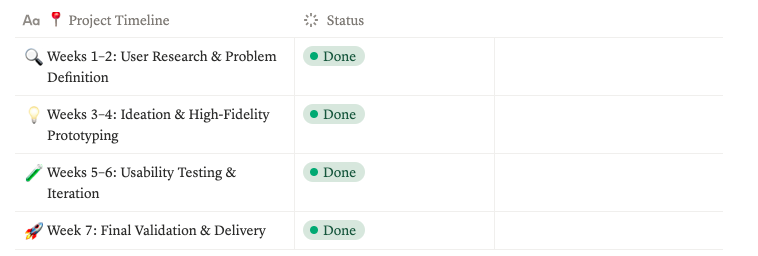
🏃♀️ 7-Week Design Sprint
Harmony Mode Case Study Presentation
Feel free to view my Figma presentation here, or watch the walkthrough video below.
🎯 Problem Statement
While Spotify excels at personalized recommendations, it offers limited ways for users to meaningfully connect with others through their music taste. Existing social features are passive and playlist-based, making discovery feel isolated rather than collaborative.
Users, especially younger listeners, frequently use external platforms like TikTok, Discord, and Instagram to share music and bond over taste. This fragmentation creates friction and reduces long-term engagement within Spotify.
Harmony Mode addresses this gap by enabling users to:
- Discover highly compatible listeners
- Understand why they match
- Build shared listening experiences
- Form lightweight social connections inside the app
👥 Target Users
- College students and young professionals who use Spotify daily
- Social listeners who enjoy sharing music
- Users interested in discovery beyond algorithmic playlists
- People who value personalization and identity through music taste
🧠 Research & Discovery
I conducted multi-round user research and usability testing with diverse participants, including:
- A Cornell sophomore who listens while studying and commuting
- A SpaceX engineer and Cornell alum in California
- A working professional who uses Spotify primarily during workouts and travel
Research methods included:
- Contextual interviews
- Task-based usability tests
- Screen-recorded prototype walkthroughs
- Observation and note synthesis
Key insights:
- Users wanted deeper insight into compatibility, not just shared playlists
- Onboarding clarity is critical to trust in "matching"
- Visual feedback increases emotional engagement
- Users prefer lightweight social interaction over full "friend" systems
- Data transparency improved perceived credibility of matches
💡 Concept & Feature Definition
Based on my research, I developed Harmony Mode as a multi-stage experience:
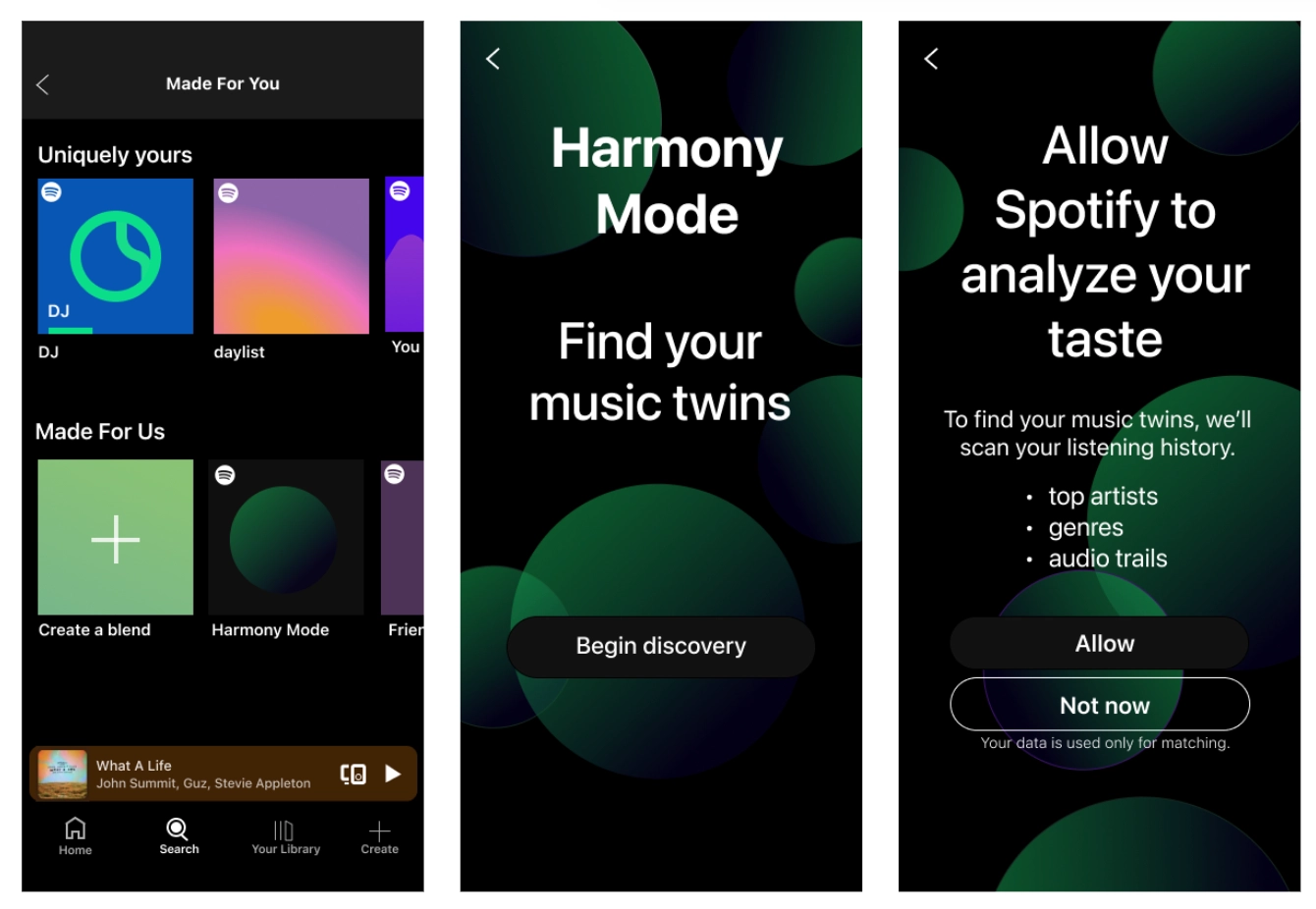
- Discovery Entry Point: Integrated into "Made for You" to feel native to Spotify
- Permission & Trust Flow: Transparent explanation of data usage
- Music DNA Analysis: Animated progress visualization of taste matching
- Match Archetypes: Three distinct compatibility types: Local Vibe, Taste Expander, Sonic Mirror
- Match Profiles: Detailed breakdowns of shared artists, genres, listening habits
- Shared Blends: Auto-generated collaborative playlists
- In-App Chat: Lightweight messaging for social bonding
- Stats Dashboard: Behavioral insights and listening patterns
Each feature was designed to balance emotional appeal with functional clarity.
🎨 Design & Prototyping
I designed 30+ high-fidelity screens and 10+ complete user flows in Figma, covering:
- Onboarding
- Matching
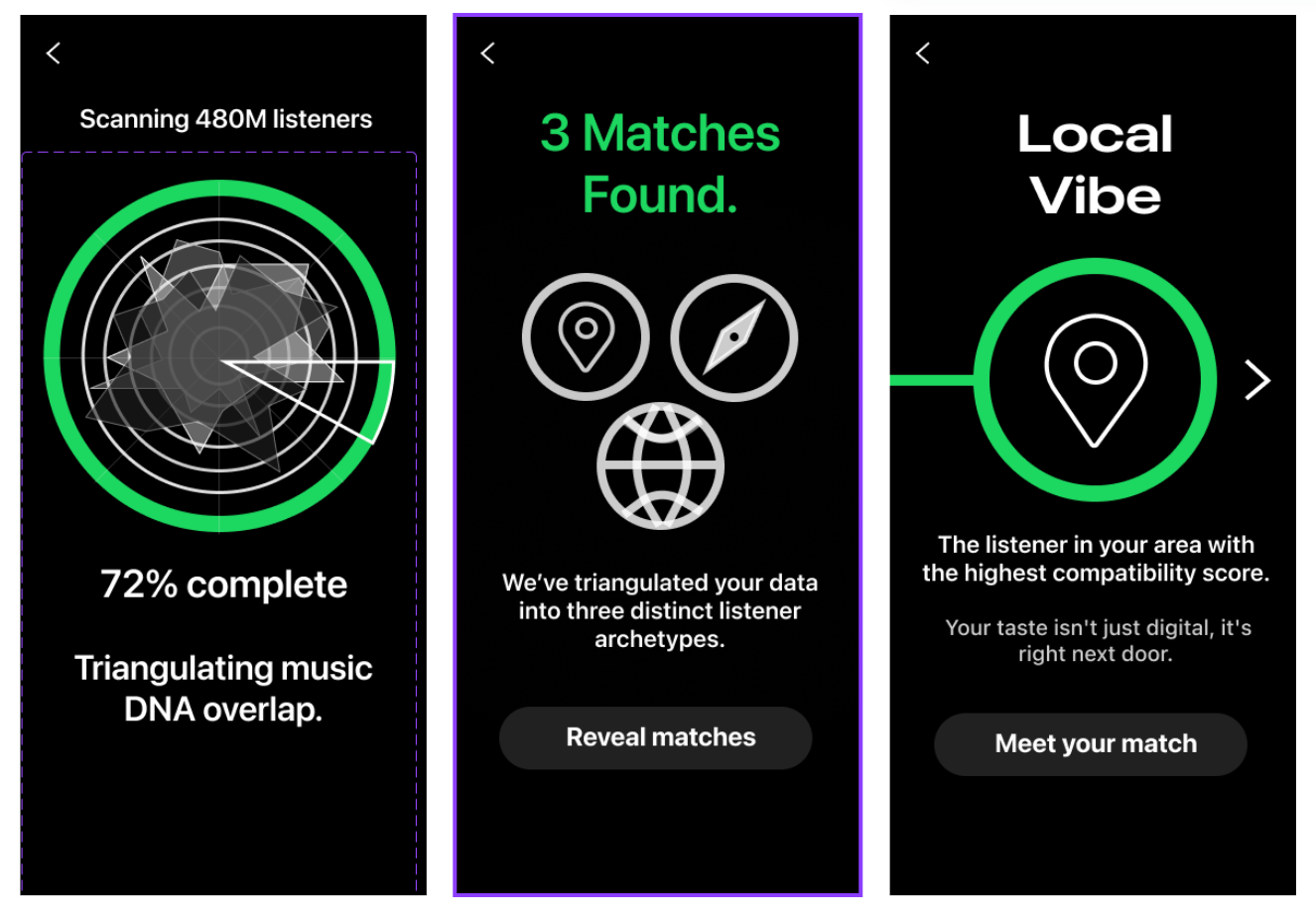
Music DNA scanning and match discovery flow, visualizing compatibility and introducing listener archetypes.
- Profiles
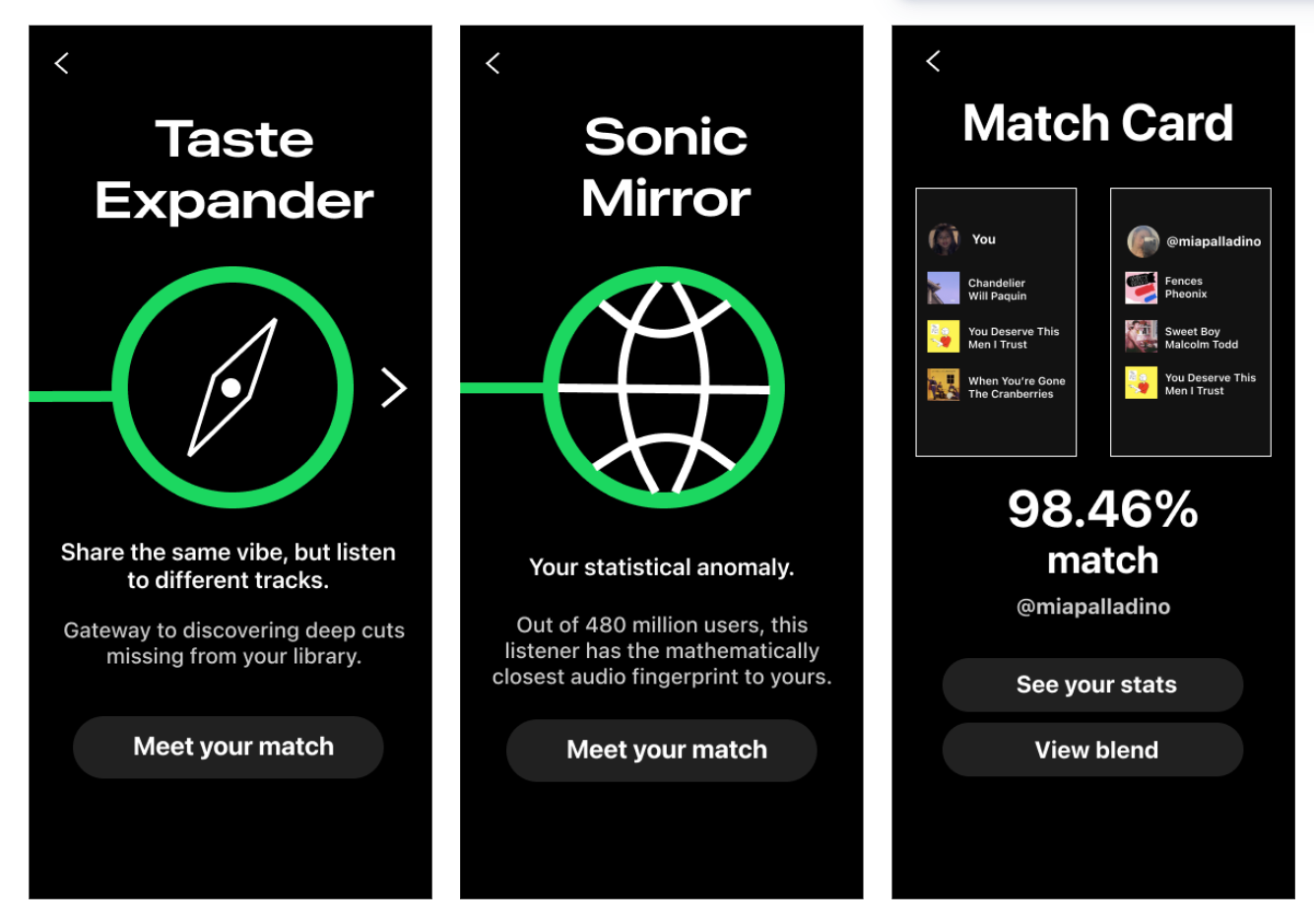
Match archetypes and profile cards highlighting different compatibility patterns and personalized recommendations.
- Stats
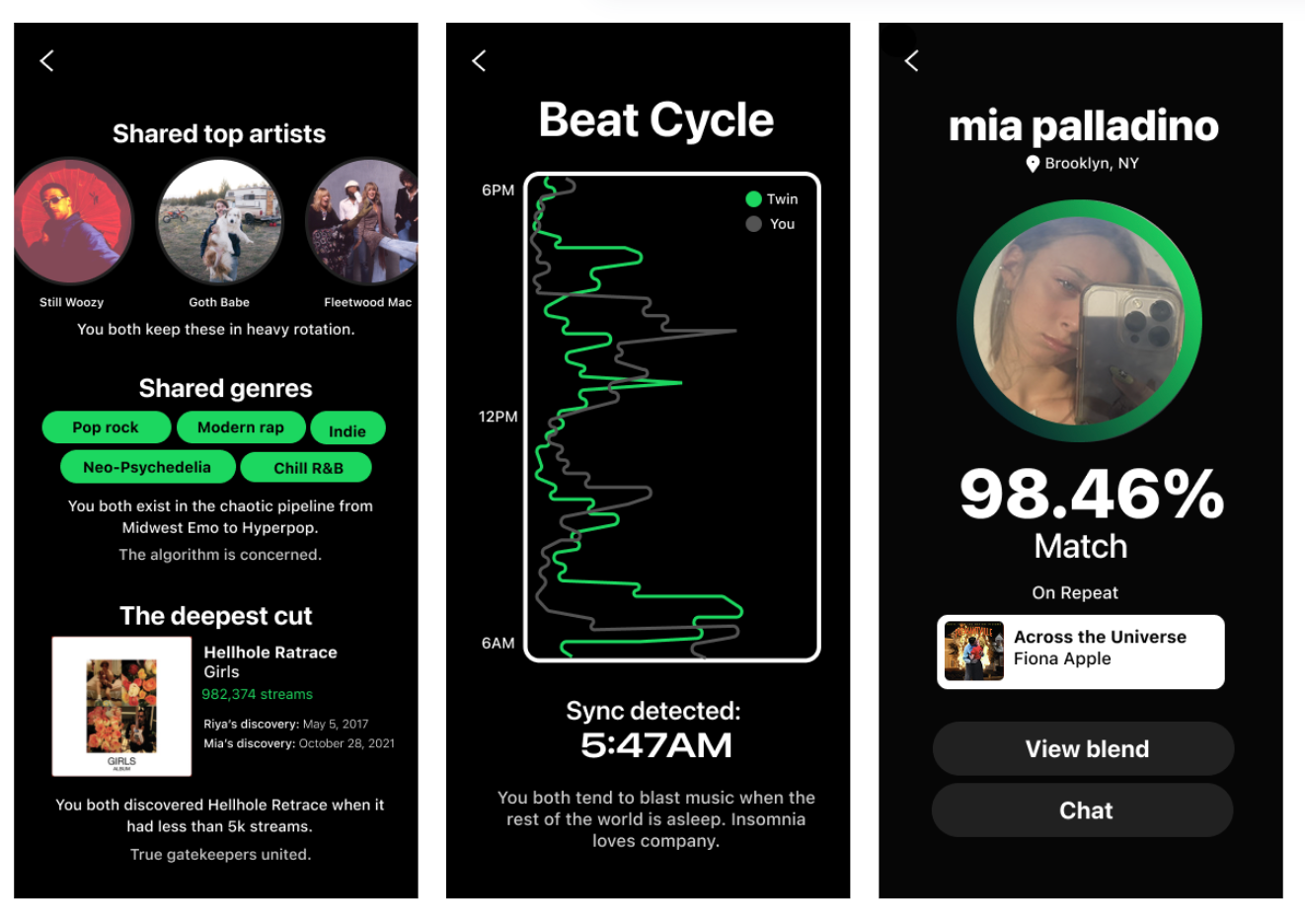
Shared insights dashboard showing overlapping artists, genres, listening cycles, and behavioral patterns.
- Blends
- Chat
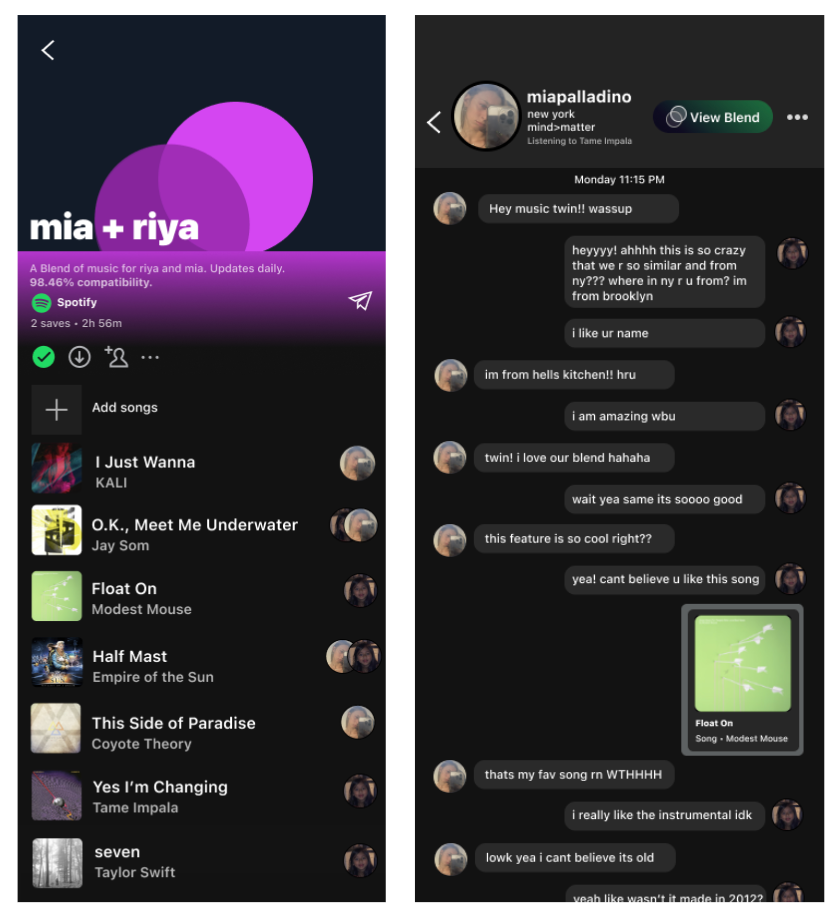
Collaborative blend and in-app chat experience supporting lightweight social interaction and shared listening.
- Permissions
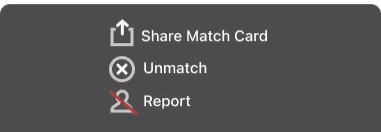
Provides users with quick access to sharing, unmatching, and reporting controls to further support privacy, safety, and autonomy.
- Discovery
Design considerations:
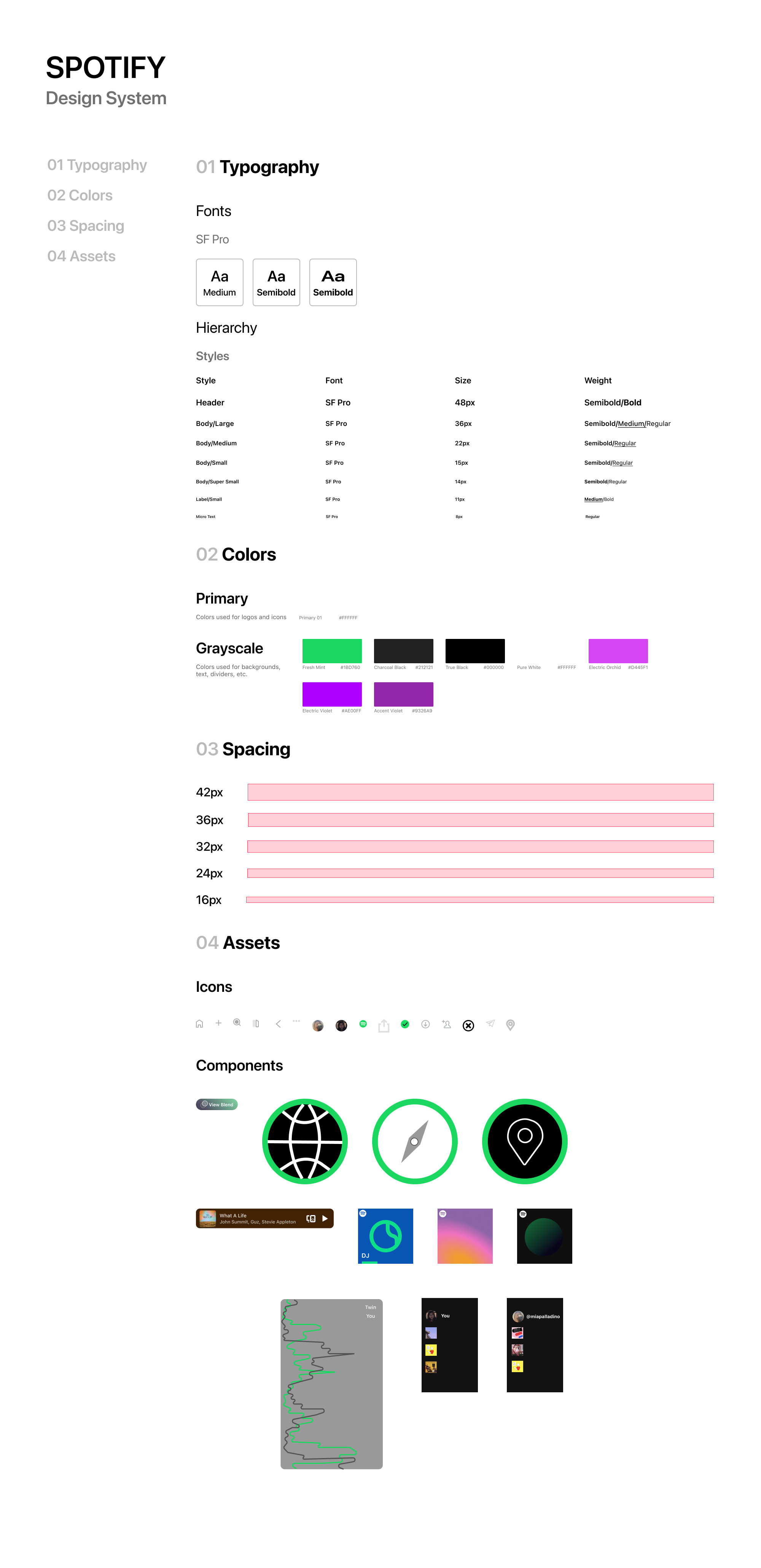
- Spotify brand alignment (dark mode, typography, motion)
- Custom iconography and visual language
- Micro-interactions and transitions
- Consistent spacing and hierarchy
- Accessibility contrast standards
I created multiple iterations for each core flow and refined layouts based on user feedback and usability issues.
🔁 Iteration & Testing
I ran three formal rounds of usability testing, generating 50+ documented observations.
Iteration focus areas:
- Reducing cognitive load in onboarding
- Improving discoverability of Harmony Mode
- Clarifying match explanations
- Optimizing navigation between stats, chat, and blends
- Refining animations to feel purposeful, not decorative
Each testing round informed structural and visual changes, which were implemented and re-tested.
📊 Product Thinking & Requirements
Beyond design, I translated research into structured product requirements:
- Defined success metrics (engagement, repeat usage, blend creation)
- Created functional specs for matching logic
- Outlined moderation and privacy guardrails
- Identified potential growth loops
- Proposed rollout and experimentation strategy
I synthesized qualitative and behavioral data into 15+ actionable requirements and roadmap recommendations.
I additionally wrote a Medium article to discuss this entire process, from brainstorming to my high-fis, with my thought process and all. Feel free to access it here: Harmony Mode Medium Article
🚀 Outcomes & Impact
- Produced a fully interactive, end-to-end prototype
- Validated feature desirability with real users
- Demonstrated increased task success across iterations
- Improved onboarding clarity and navigation flow
- Created a scalable concept aligned with Spotify's ecosystem
- Authored Medium article on the entire process
Users reported:
- Higher perceived personalization
- Greater emotional connection to matches
- Increased interest in social discovery
🌱 Reflection & Growth
Harmony Mode strengthened my ability to:
- Own a product from concept to execution
- Balance creativity with constraints
- Design for emotional and behavioral outcomes
- Translate user pain points into system-level solutions
- Iterate rapidly using research and data
There is definitely a lot of room to improve, such as by completing the screens for Local Vibe and Taste Expander. This project was to dive deep into product design and just have fun exploring, and for that, I am proud of my work!
The project reflects my design philosophy: thoughtful observation, intentional creativity, and rigorous execution grounded in user needs and business impact.